

Jacksonville, FL, January 15, 2026
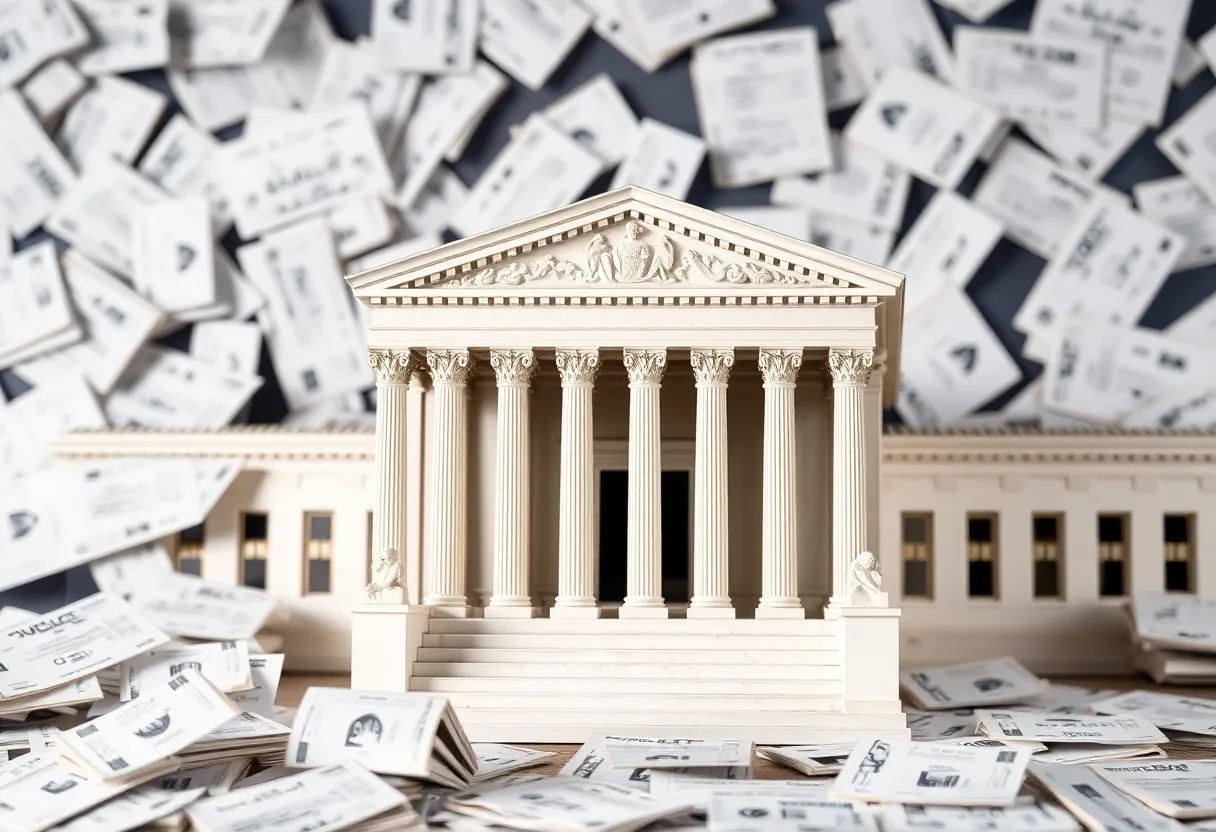
The U.S. Supreme Court revitalized a challenge to an Illinois mail-in voting law, impacting election procedures nationwide. The ruling allows candidates to sue over electoral processes without proving the violations affected their chances of winning. This decision is pivotal for electoral integrity and has implications for local businesses that depend on fair elections. With a surge in election-related lawsuits anticipated, the ruling establishes a significant precedent for future electoral challenges.
Jacksonville, FL
Supreme Court Sets Stage for Election Procedure Challenges
The U.S. Supreme Court has recently revitalized the challenge to an Illinois mail-in voting law, which could have wide-reaching implications for election laws across the nation. This pivotal ruling sends a clear message regarding candidates’ legal standing in matters of electoral procedures, potentially reshaping the landscape of election-related litigation moving forward.
In a decision that reflects a growing concern for electoral integrity, the Court ruled 7-2 that candidates have the right to sue over election procedures without needing to prove that the violations affected their chances of winning. This development is important for small businesses and aspiring entrepreneurs in local communities, who may depend on fair electoral processes for a conducive business environment.
Background of the Case
In 2022, Representative Mike Bost, a Republican from Illinois, along with two fellow candidates, initiated a lawsuit against the law permitting mail-in ballots that are postmarked by Election Day to be counted if they arrive as late as two weeks afterward. The plaintiffs contended that this law is in violation of federal election statutes. Initially, lower courts dismissed the case, asserting that Bost lacked legal standing, since the late ballots did not influence his decisive victory. However, the Supreme Court’s latest decision overturns these previous rulings, thereby granting Bost and the others the opportunity to challenge the law further. The Court is expected to hear another case regarding the broader implications of late-arriving mail ballots in the spring.
Implications of the Supreme Court’s Decision
This ruling establishes a significant precedent as it affirms that candidates can challenge election laws even if their own electoral prospects remain unaffected. The ramifications of this could lead to a surge in election-related lawsuits, as candidates could become emboldened to contest various electoral processes. Local entrepreneurs and business owners in Jacksonville may recognize the importance of stable and transparent election laws, which can foster a more favorable business landscape.
Related Developments in Voting Restrictions
Separately, a federal judge in Seattle has blocked a controversial executive order from President Trump that sought to impose stricter voting restrictions, particularly affecting vote-by-mail systems in states like Washington and Oregon. The order, which included requirements for proof of citizenship and a mandate that all mail-in ballots be received by Election Day, faced legal challenges that underscored the constitutional limits of presidential power in regulating federal elections. This development reflects ongoing debates about voter access and electoral regulation across the nation.
Conclusion
The Supreme Court’s decision marks a notable turning point in the discussion about election integrity and candidate rights, with potential impacts on various electoral processes across the country. These developments are key for maintaining a vibrant local economy in Jacksonville, as fair elections can significantly influence business success. Community members are encouraged to stay informed and engaged with local electoral processes, recognizing the connection between well-regulated elections and a robust economic environment.
What did the Supreme Court decide regarding the Illinois mail-in ballot law?
The Supreme Court revived a Republican congressman’s challenge to an Illinois law that permits the counting of mail-in ballots received up to two weeks after Election Day, provided they are postmarked by that date. The Court ruled 7-2 that candidates have the legal standing to sue over election procedures, regardless of whether the outcome was affected. Chief Justice John Roberts emphasized that deviations from election laws can harm candidates, win or lose. However, the Court did not decide on the legality of the mail-ballot timing itself, postponing that issue for a future case. Justices Amy Coney Barrett and Elena Kagan found the case permissible but cautioned against generalizing candidate standing, while Justices Ketanji Brown Jackson and Sonia Sotomayor dissented, warning such rulings could trigger a flood of politically motivated lawsuits.
What is the background of the case?
In 2022, Representative Mike Bost, a Republican from Illinois, along with two other candidates, filed a lawsuit challenging the Illinois law that allows mail-in ballots postmarked by Election Day to be counted if received up to two weeks later. The plaintiffs argued that this law violated federal election statutes. Lower courts dismissed the case, ruling that Bost lacked legal standing because the late-arriving ballots had little impact on his decisive victory. The Supreme Court’s recent decision overturns these lower court rulings, granting Bost and the other candidates the right to pursue their challenge. The Court has yet to address the substantive legality of the Illinois law and is expected to hear another case on the broader issue of late-arriving mail ballots in the spring.
What are the implications of the Supreme Court’s decision?
The Supreme Court’s decision is significant as it establishes that candidates have the standing to challenge election procedures, even if they cannot demonstrate that the alleged violations affected the election outcome. This ruling could lead to an increase in election-related litigation, as candidates may now feel empowered to contest various aspects of election laws and procedures. The Court’s forthcoming decision on the broader issue of late-arriving mail ballots will likely have substantial implications for election laws nationwide.
What is the status of related voting restrictions in Washington and Oregon?
In a related matter, a federal judge in Seattle recently blocked President Donald Trump’s executive order imposing new voting restrictions, specifically preventing enforcement in the vote-by-mail states of Washington and Oregon. The order required proof of citizenship for voter registration and mandated that all mail-in ballots be received—not merely postmarked—by Election Day, threatening state funding for noncompliance. U.S. District Judge John H. Chun ruled that the order exceeded presidential authority, noting that under the Constitution, only Congress and the states can regulate federal elections. This decision aligns with prior rulings in similar cases from Massachusetts and Washington, D.C. Officials from Washington and Oregon argued that the order could disenfranchise tens of thousands of voters; for example, in the 2024 election, Washington counted nearly 120,000 valid post-Election Day ballots, and Oregon counted about 14,000. The states brought their lawsuit independently, citing unique harm due to their exclusive vote-by-mail systems. Trump’s election measures were part of a broader Republican push against alleged noncitizen voting, although such offenses remain rare and carry severe penalties.
| Feature | Description |
|---|---|
| Supreme Court Decision | The Supreme Court revived a Republican congressman’s challenge to an Illinois law that permits the counting of mail-in ballots received up to two weeks after Election Day, provided they are postmarked by that date. The Court ruled 7-2 that candidates have the legal standing to sue over election procedures, regardless of whether the outcome was affected. Chief Justice John Roberts emphasized that deviations from election laws can harm candidates, win or lose. However, the Court did not decide on the legality of the mail-ballot timing itself, postponing that issue for a future case. Justices Amy Coney Barrett and Elena Kagan found the case permissible but cautioned against generalizing candidate standing, while Justices Ketanji Brown Jackson and Sonia Sotomayor dissented, warning such rulings could trigger a flood of politically motivated lawsuits. |
| Background of the Case | In 2022, Representative Mike Bost, a Republican from Illinois, along with two other candidates, filed a lawsuit challenging the Illinois law that allows mail-in ballots postmarked by Election Day to be counted if received up to two weeks later. The plaintiffs argued that this law violated federal election statutes. Lower courts dismissed the case, ruling that Bost lacked legal standing because the late-arriving ballots had little impact on his decisive victory. The Supreme Court’s recent decision overturns these lower court rulings, granting Bost and the other candidates the right to pursue their challenge. The Court has yet to address the substantive legality of the Illinois law and is expected to hear another case on the broader issue of late-arriving mail ballots in the spring. |
| Implications of the Decision | The Supreme Court’s decision is significant as it establishes that candidates have the standing to challenge election procedures, even if they cannot demonstrate that the alleged violations affected the election outcome. This ruling could lead to an increase in election-related litigation, as candidates may now feel empowered to contest various aspects of election laws and procedures. The Court’s forthcoming decision on the broader issue of late-arriving mail ballots will likely have substantial implications for election laws nationwide. |
| Related Developments | In a related matter, a federal judge in Seattle recently blocked President Donald Trump’s executive order imposing new voting restrictions, specifically preventing enforcement in the vote-by-mail states of Washington and Oregon. The order required proof of citizenship for voter registration and mandated that all mail-in ballots be received—not merely postmarked—by Election Day, threatening state funding for noncompliance. U.S. District Judge John H. Chun ruled that the order exceeded presidential authority, noting that under the Constitution, only Congress and the states can regulate federal elections. This decision aligns with prior rulings in similar cases from Massachusetts and Washington, D.C. Officials from Washington and Oregon argued that the order could disenfranchise tens of thousands of voters; for example, in the 2024 election, Washington counted nearly 120,000 valid post-Election Day ballots, and Oregon counted about 14,000. The states brought their lawsuit independently, citing unique harm due to their exclusive vote-by-mail systems. Trump’s election measures were part of a broader Republican push against alleged noncitizen voting, although such offenses remain rare and carry severe penalties. |
Deeper Dive: News & Info About This Topic
HERE Resources
Investigation Launched into Alleged Illegal Gun Registry in Jacksonville
Federal Judge Confirms Riggs’ Election Win in North Carolina
Jacksonville Man Wins $1 Million Lottery Prize
Jacksonville Residents Score Big with Lottery Wins

Author: STAFF HERE JACKSONVILLE WRITER
The JACKSONVILLE STAFF WRITER represents the experienced team at HEREJacksonville.com, your go-to source for actionable local news and information in Jacksonville, Duval County, and beyond. Specializing in "news you can use," we cover essential topics like product reviews for personal and business needs, local business directories, politics, real estate trends, neighborhood insights, and state news affecting the area—with deep expertise drawn from years of dedicated reporting and strong community input, including local press releases and business updates. We deliver top reporting on high-value events such as the Jacksonville Jazz Festival, Riverside Arts Market, and World of Nations Celebration. Our coverage extends to key organizations like the Jacksonville Chamber of Commerce and JAXUSA Partnership, plus leading businesses in logistics, healthcare, and entertainment that power the local economy such as CSX Corporation, Baptist Health, and VyStar Credit Union. As part of the broader HERE network, including HEREOrlando.com, HEREStPetersburg.com, HERETallahassee.com, and HERETampa.com, we provide comprehensive, credible insights into Florida's dynamic landscape.