

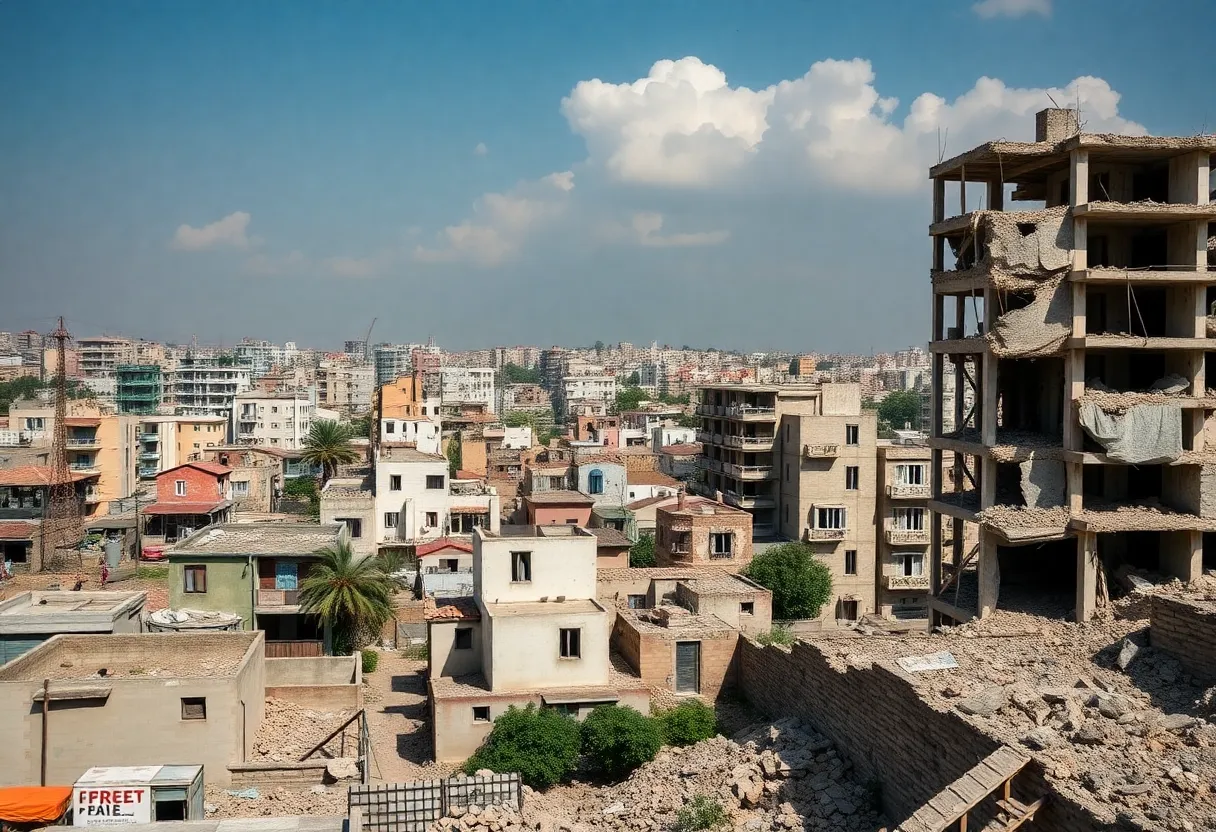
Gaza, January 15, 2026
The United States has initiated the second phase of its Gaza ceasefire plan, aiming to disarm Hamas and establish a technocratic administration. Israeli Prime Minister Netanyahu casts doubt on the plan’s effectiveness, highlighting ongoing skepticism from Palestinians regarding its practical implications. Challenges such as disarmament, international security deployment, and reconstruction funding of over $50 billion remain unresolved, raising questions about the future of Gaza amidst continuing violence and humanitarian crises.
Jacksonville, FL
U.S. Launches Second Phase of Gaza Ceasefire Plan
Aiming for stability in the region, key obstacles remain
The United States has announced the commencement of the second phase of a ceasefire plan in Gaza, aiming to disarm Hamas, rebuild the region, and establish a technocratic Palestinian administration under U.S. supervision.
Key components of this phase include the return of the final Israeli hostage, Ran Gvili, and efforts to dismantle Hamas’s 18-year governance in Gaza. Hamas has expressed willingness to transition governance to the technocratic body and engage in discussions about resistance weapons. However, significant challenges remain, notably disarmament, deploying an international security force, and large-scale reconstruction anticipated to cost over $50 billion. The U.S.-led “Board of Peace” will oversee the transitional government, but its structure and members are not yet disclosed.
Israeli Perspective
Israeli Prime Minister Benjamin Netanyahu has downplayed the announcement of the second phase of the Gaza ceasefire as largely symbolic, casting doubt on the feasibility of its more complex provisions. Speaking with the parents of Ran Gvili, the last Israeli hostage whose remains are still in Gaza, Netanyahu reiterated that recovering his body is still a priority. The new phase proposes a Palestinian expert-led governing committee and an international “Board of Peace,” but key details such as the disarmament of Hamas, reopening of the Rafah border, and deployment of international forces remain unresolved.
Ground Reality in Gaza
On the ground, Palestinian residents have expressed skepticism over the ceasefire’s practical impact, reporting ongoing violence and severe humanitarian challenges. Over 450 Palestinians have died since the ceasefire began in October, part of more than 71,000 deaths since the conflict erupted in October 2023, according to Gaza’s Health Ministry. Displaced civilians face dire conditions amid winter storms and a lack of aid. The transition phase also includes daunting tasks like rebuilding war-torn Gaza—estimated to cost over $50 billion—and restructuring governance after Hamas dissolves its civil arm. However, Hamas has not addressed the future of its military wing or associated civil institutions, and it continues to reject disarmament demands from Israel.
Background on the Ceasefire Plan
The Gaza ceasefire plan, officially known as the Comprehensive Plan to End the Gaza Conflict, was initiated in October 2025. The first phase focused on an immediate cessation of hostilities, the release of hostages, and the entry of humanitarian aid into Gaza. The current second phase aims to address the demilitarization of Hamas, the establishment of a technocratic Palestinian administration, and the reconstruction of Gaza. The U.S.-led “Board of Peace” is set to oversee the transitional government, with former U.S. President Donald Trump proposed to lead the board, though its structure and members have not been officially announced.
Challenges Ahead
Despite the announcement, significant challenges remain in implementing the ceasefire plan. These include the full disarmament of Hamas, the deployment of an international security force, and the reconstruction of Gaza, which is anticipated to cost over $50 billion. The U.S.-led “Board of Peace” is set to oversee the transitional government, but its structure and members have not been officially announced. Additionally, skepticism exists regarding Hamas’s willingness to disarm voluntarily, and the future of its military wing and associated civil institutions remains uncertain.
International Reactions
Egypt, Turkey, and Qatar have welcomed the new Palestinian committee, which will be led by Ali Shaath, a former deputy minister and economic expert from Gaza. These countries have expressed hope for improved stability and dignity for the Palestinian people. However, Israeli Prime Minister Benjamin Netanyahu has downplayed the announcement of the second phase of the Gaza ceasefire as largely symbolic, casting doubt on the feasibility of its more complex provisions. He emphasized that recovering the remains of Israeli hostages remains a priority.
Conclusion
The second phase of the Gaza ceasefire plan represents a critical step toward achieving long-term peace and stability in the region. However, its success hinges on the full cooperation of all parties involved, the effective implementation of disarmament measures, and the substantial reconstruction efforts required to rebuild Gaza. Ongoing international support and monitoring will be essential to ensure the plan’s objectives are met and to address the complex challenges that lie ahead.
FAQ
What is the Gaza ceasefire plan?
The Gaza ceasefire plan, officially known as the Comprehensive Plan to End the Gaza Conflict, is a multilateral agreement between Israel and Hamas that aims to address the ongoing Gaza war and broader Middle Eastern crisis. Led by United States president Donald Trump, it was negotiated in consultation with many Arab and Muslim countries. The plan includes multiple phases, with the current second phase focusing on demilitarization, technocratic governance, and reconstruction of Gaza.
What are the key components of the second phase of the Gaza ceasefire plan?
The second phase of the Gaza ceasefire plan includes the return of the final Israeli hostage, Ran Gvili, efforts to dismantle Hamas’s 18-year governance in Gaza, the establishment of a technocratic Palestinian administration under U.S. supervision, and large-scale reconstruction of Gaza, estimated to cost over $50 billion. The U.S.-led “Board of Peace” will oversee the transitional government, but its structure and members have not been officially announced.
What challenges remain in implementing the Gaza ceasefire plan?
Significant challenges in implementing the Gaza ceasefire plan include the full disarmament of Hamas, the deployment of an international security force, and the reconstruction of Gaza. Skepticism exists regarding Hamas’s willingness to disarm voluntarily, and the future of its military wing and associated civil institutions remains uncertain. Additionally, the success of the plan depends on the full cooperation of all parties involved and effective international support and monitoring.
How have international leaders reacted to the Gaza ceasefire plan?
International reactions have varied. Egypt, Turkey, and Qatar have welcomed the new Palestinian committee, expressing hope for improved stability and dignity for the Palestinian people. However, Israeli Prime Minister Benjamin Netanyahu has downplayed the announcement of the second phase of the Gaza ceasefire as largely symbolic, casting doubt on the feasibility of its more complex provisions. He emphasized that recovering the remains of Israeli hostages remains a priority.
What is the current humanitarian situation in Gaza?
Palestinian residents have expressed skepticism over the ceasefire’s practical impact, reporting ongoing violence and severe humanitarian challenges. Over 450 Palestinians have died since the ceasefire began in October, part of more than 71,000 deaths since the conflict erupted in October 2023, according to Gaza’s Health Ministry. Displaced civilians face dire conditions amid winter storms and a lack of aid. The transition phase also includes daunting tasks like rebuilding war-torn Gaza—estimated to cost over $50 billion—and restructuring governance after Hamas dissolves its civil arm. However, Hamas has not addressed the future of its military wing or associated civil institutions, and it continues to reject disarmament demands from Israel.
Key Features of the Gaza Ceasefire Plan
| Feature | Description |
|---|---|
| Ceasefire Agreement | Immediate cessation of hostilities between Israel and Hamas, with all military operations suspended and frontlines frozen. All Israeli hostages, alive and deceased, were to be returned within 72 hours. Palestinian prisoners were to be released proportionally, including 250 life sentence prisoners and 1,700 individuals arrested since the war began. For every Israeli hostage whose remains are released, Israel will release the remains of 15 deceased Gazans. |
| Demilitarization | Destruction of Hamas’s offensive weaponry, such as tunnels and military infrastructure, to neutralize their capacity for further violence. This includes the full disarmament of Hamas and the deployment of an international security force to ensure compliance. |
| Technocratic Governance | Establishment of a technocratic Palestinian administration under U.S. supervision to manage Gaza’s daily affairs. |
Deeper Dive: News & Info About This Topic
HERE Resources
Masked Attack on Nursery Raises Concerns Over Violence
U.S. Withdraws from 66 International Organizations
Trevor and Marissa Lawrence Support Military Families with Operation Sunshine
Big 12 Commissioner Calls for Passage of SCORE Act
Gaza Ceasefire Negotiations: A Critical Moment in Peace Efforts
The Return Home Amid Ceasefire in Gaza
Jacksonville Faces Multiple House Fires Resulting in Displacement, Injuries, and Fatalities
Trump’s Bold Move: Hope for a 60-Day Ceasefire in Gaza
Pro-Palestinian Activists Protest at Trump Golf Course

Author: STAFF HERE JACKSONVILLE WRITER
The JACKSONVILLE STAFF WRITER represents the experienced team at HEREJacksonville.com, your go-to source for actionable local news and information in Jacksonville, Duval County, and beyond. Specializing in "news you can use," we cover essential topics like product reviews for personal and business needs, local business directories, politics, real estate trends, neighborhood insights, and state news affecting the area—with deep expertise drawn from years of dedicated reporting and strong community input, including local press releases and business updates. We deliver top reporting on high-value events such as the Jacksonville Jazz Festival, Riverside Arts Market, and World of Nations Celebration. Our coverage extends to key organizations like the Jacksonville Chamber of Commerce and JAXUSA Partnership, plus leading businesses in logistics, healthcare, and entertainment that power the local economy such as CSX Corporation, Baptist Health, and VyStar Credit Union. As part of the broader HERE network, including HEREOrlando.com, HEREStPetersburg.com, HERETallahassee.com, and HERETampa.com, we provide comprehensive, credible insights into Florida's dynamic landscape.