

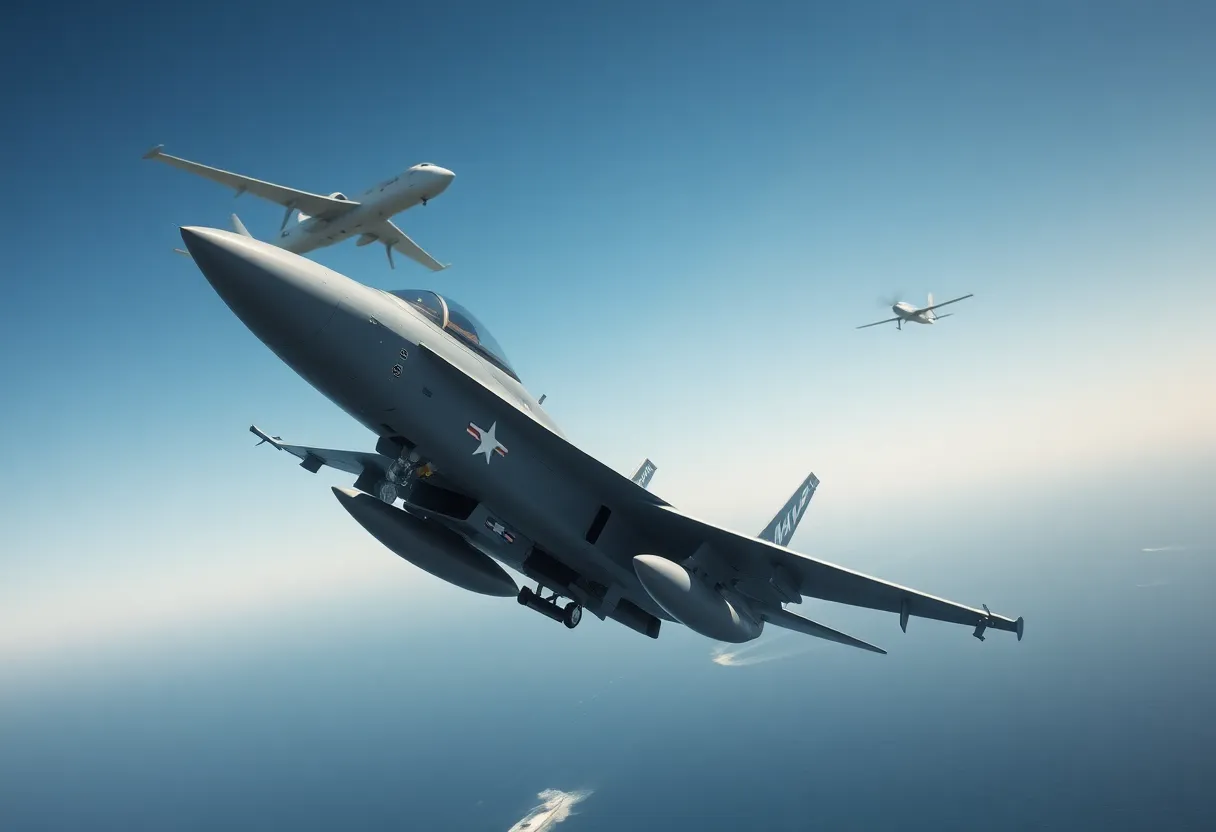
Arabian Sea, February 4, 2026
On February 3, a U.S. Navy F-35C fighter jet intercepted and destroyed an Iranian drone approaching the USS Abraham Lincoln. This incident underscores rising tensions between the U.S. and Iran, especially in light of aggressive actions in the Strait of Hormuz. The U.S. military’s swift response highlights the importance of national security and the protection of maritime shipping routes, crucial for global commerce. Diplomatic efforts remain underway, illustrating the complex balance between military readiness and negotiation in international relations.
Jacksonville, FL
U.S. Navy Counteracts Drone Threat in Arabian Sea
A strategic interception highlights rising tensions in U.S.-Iran relations
On February 3, 2026, a U.S. Navy F-35C fighter jet successfully intercepted and destroyed an Iranian Shahed-139 drone approaching the USS Abraham Lincoln in the Arabian Sea. This incident underscores the ongoing hostilities between the U.S. and Iran, a situation that reflects broader geopolitical challenges. The swift action by the Navy illustrates the importance of maintaining national security and the readiness of U.S. forces in regions of strategic concern.
In recent months, the increasing presence of Iranian forces has created an atmosphere of uncertainty, particularly following their aggressive behavior in the Strait of Hormuz, where they targeted the U.S.-flagged merchant vessel Stena Imperative. These incidents not only emphasize the need for military preparedness but also highlight the delicate nature of international waters, where U.S. naval operations are vital for safeguarding shipping routes vital to global commerce.
Understanding the Incident
The U.S. Navy’s action against the Iranian drone was a crucial decision made based on its potential threat to the USS Abraham Lincoln. The drone was “aggressively approaching” the aircraft carrier, prompting the engagement to ensure that no American lives were at risk and to protect U.S. maritime assets. Thankfully, this confrontation ended without any harm to American personnel or damage to U.S. equipment.
The Threat to Merchant Vessels
On the same day as the drone incident, Iranian forces harassed the Stena Imperative in the Strait of Hormuz, showcasing a coordinated effort to intimidate U.S. interests in the region. The USS McFaul provided immediate defensive support, ensuring the safety of the merchant vessel. This rapid military response highlights the capability of U.S. Navy forces to protect commercial shipping against hostile actions.
Tensions Escalate
These series of events have significantly heightened tensions between the United States and Iran. In response to the threats posed by Iranian military activities, the U.S. has expanded its military presence in the region. This includes deploying additional warships and air defense systems aimed at deterring further provocations. Such military readiness is critical in a complex geopolitical landscape where diplomatic avenues and military strategy often intersect.
The Path to Diplomacy
Despite the escalating tensions, diplomatic efforts are still on the table. U.S. Special Envoy Steve Witkoff is expected to engage Iranian officials in Turkey to discuss nuclear issues, a focal point in U.S.-Iran relations. Iranian President Masoud Pezeshkian’s directive for his foreign minister to pursue “fair and equitable negotiations” suggests a willingness to explore diplomatic resolutions. The emergence of dialogue amid military strains illustrates the intricate balance of power and negotiation that defines international relationships.
Conclusion
The interception of the Iranian drone and the response to the harassment of the Stena Imperative exemplify the ongoing complexities in U.S.-Iran relations and the necessity of robust military preparedness. As local populations witness these global events unfold, it is essential to recognize the interplay of military defense and diplomatic interaction as vital components of national security strategy. The Jacksonville community, like many others, remains invested in understanding these dynamics and supporting our local military and economic interests.
FAQ
What happened on February 3, 2026, involving the USS Abraham Lincoln?
On February 3, 2026, a U.S. Navy F-35C fighter jet shot down an Iranian Shahed-139 drone that was approaching the aircraft carrier USS Abraham Lincoln in the Arabian Sea. The drone was described as “aggressively approaching” the carrier with “unclear intent” and continued its course despite de-escalatory measures taken by U.S. forces operating in international waters. No American personnel were harmed, and no U.S. equipment was damaged during the incident.
What other incident occurred involving Iranian forces on the same day?
On the same day, Iranian forces harassed the U.S.-flagged merchant vessel Stena Imperative in the Strait of Hormuz. Two Iranian boats and an Iranian Mohajer drone approached the ship at high speeds, threatening to board and seize the tanker. The USS McFaul responded by providing defensive support, ensuring the merchant vessel’s safe passage.
How have these incidents affected U.S.-Iran relations?
These incidents have heightened tensions between the United States and Iran. In response to the unrest in Iran, the U.S. has increased its military presence in the region, deploying additional service members, warships, and air defense systems near Iran. Despite these confrontations, diplomatic efforts continue. U.S. Special Envoy Steve Witkoff is planning to hold talks with Iranian officials in Turkey later this week, focusing primarily on nuclear issues. Iranian President Masoud Pezeshkian has instructed the country’s foreign minister to “pursue fair and equitable negotiations” with the United States, signaling a potential shift toward diplomacy amid escalating hostilities.
Key Features
| Feature | Details |
|---|---|
| Incident Date | February 3, 2026 |
| Location | Arabian Sea, near USS Abraham Lincoln |
| Involved Parties | U.S. Navy, Iranian forces |
| Drone Type | Iranian Shahed-139 |
| U.S. Response | F-35C fighter jet shot down the drone |
| Merchant Vessel Involved | Stena Imperative |
| U.S. Military Response to Merchant Vessel | USS McFaul provided defensive support |
| Diplomatic Efforts | U.S. Special Envoy Steve Witkoff plans talks with Iranian officials in Turkey; Iranian President Masoud Pezeshkian seeks “fair and equitable negotiations” with the U.S. |
Deeper Dive: News & Info About This Topic
HERE Resources

Author: STAFF HERE JACKSONVILLE WRITER
The JACKSONVILLE STAFF WRITER represents the experienced team at HEREJacksonville.com, your go-to source for actionable local news and information in Jacksonville, Duval County, and beyond. Specializing in "news you can use," we cover essential topics like product reviews for personal and business needs, local business directories, politics, real estate trends, neighborhood insights, and state news affecting the area—with deep expertise drawn from years of dedicated reporting and strong community input, including local press releases and business updates. We deliver top reporting on high-value events such as the Jacksonville Jazz Festival, Riverside Arts Market, and World of Nations Celebration. Our coverage extends to key organizations like the Jacksonville Chamber of Commerce and JAXUSA Partnership, plus leading businesses in logistics, healthcare, and entertainment that power the local economy such as CSX Corporation, Baptist Health, and VyStar Credit Union. As part of the broader HERE network, including HEREOrlando.com, HEREStPetersburg.com, HERETallahassee.com, and HERETampa.com, we provide comprehensive, credible insights into Florida's dynamic landscape.