
Jacksonville, FL, January 14, 2026
The recent military intervention by the U.S. in Venezuela, resulting in the capture of President Maduro, has generated significant discussion in Jacksonville. Local communities are evaluating how these foreign policy shifts could impact regional stability and economic opportunities. The focus on Venezuelan oil assets and new partnerships emphasizes the potential for innovation among small businesses in Florida. As public opinion remains divided over the intervention, this situation highlights the importance of local engagement in foreign affairs.
Jacksonville Reacts to U.S. Actions in Venezuela
Significant shifts in U.S. foreign policy spark local interest and debate
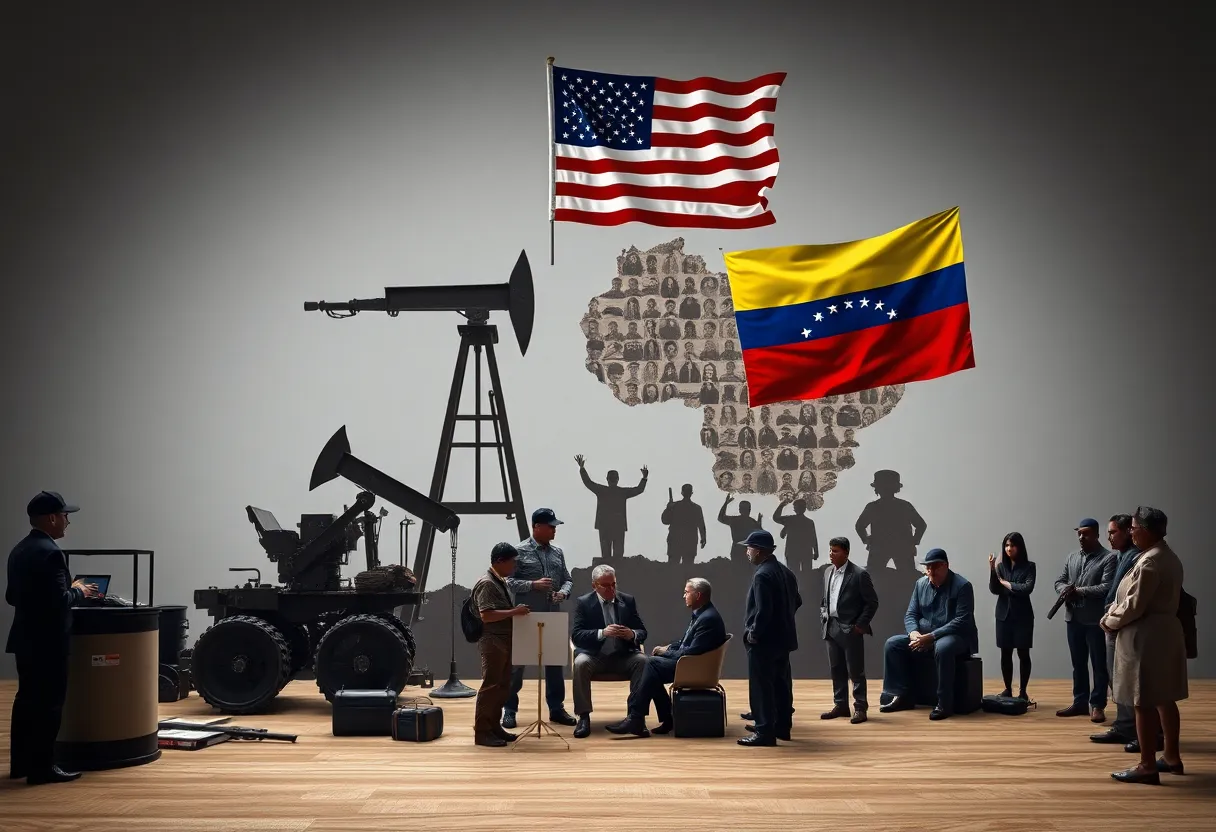
Jacksonville, FL – In a bold move and remarkable escalation of U.S. foreign policy, President Donald Trump has initiated impactful actions in Venezuela, including a military operation that resulted in the capture of President Nicolás Maduro and a strategic seizure of Venezuelan oil assets. This development has caught the attention of many in Jacksonville, where discussions around the implications for regional stability, drug trafficking, and U.S. foreign relations are of increasing importance. As local entrepreneurs and communities look for avenues to thrive, this situation presents a unique lens through which to evaluate the connection between international actions and local economic impacts.
The interplay between U.S. regulations and international actions may create opportunities for innovation and resilience among Jacksonville’s small businesses. As President Trump asserts greater control over Venezuela’s oil reserves, the potential for new partnerships and energy initiatives arises in the context of Florida’s economic landscape.
U.S. Military Operation and the Arrest of Maduro
On January 3, 2026, the United States carried out a military operation in Caracas, leading to the capture of President Nicolás Maduro and his wife, Cilia Flores. The justification was framed as a necessary law-enforcement action targeting narcoterrorism and drug trafficking. Following their capture, charges were filed against them in Manhattan federal court. This operation has sparked global condemnation, particularly from Venezuelan officials and several other nations, who criticize it as a violation of Venezuela’s sovereignty. Advocacy for human rights also raises concerns, particularly regarding casualties during the operation.
Seizing Venezuelan Oil Assets
Alongside the military actions, the U.S. has moved to seize Venezuelan oil assets, including multiple tankers laden with crude oil. Plans are in place to sell up to 50 million barrels of Venezuelan oil on the open market, with proceeds expected to range between $1.8 to $3 billion. These funds are set to be managed by the U.S. to prevent corruption and ensure they reach ordinary Venezuelans. This comprehensive control over Venezuelan oil sales may bolster the U.S. energy market and influence global prices while simultaneously addressing critical humanitarian concerns in Venezuela.
Foreign Policy Implications and Regional Dynamics
The intervention in Venezuela signals a shift in U.S. foreign policy with broader implications for relations across Latin America. Recent military agreements have been forged with countries like Paraguay, Ecuador, Peru, and Trinidad and Tobago, focused on joint efforts against narcoterrorism. Furthermore, tariffs imposed on nations importing Venezuelan oil are aligned with a strategic aim to economically isolate the Maduro regime. Such actions may reshape economic ties and partnerships that could benefit local businesses in Jacksonville, urging them to adapt to shifting geopolitical landscapes.
Public Opinion and Domestic Reactions
Reactions within the United States reveal a divided public opinion regarding the intervention in Venezuela. Recent polling reflects that a majority believe President Trump has crossed lines in his military engagement abroad, particularly regarding this matter in Venezuela. While Republican voters generally maintain support for the president’s approach, Democrats and independents express significant reservations about the U.S. role internationally. This divide highlights an opportunity for local leaders and businesses to engage in dialogues around foreign policy and its economic ramifications for Floridians.
Background on U.S. Policy Regarding Venezuela
The U.S. intervention is part of a broader strategy aimed at addressing issues such as drug trafficking, regional stability, and access to oil resources. An Executive Order in early 2025 set forth tariffs targeting imports linked to Venezuelan oil, further isolating the Maduro regime. The evolving policies and military operations underscore the complexities of U.S.-Latin America relations and the potential for unexpected shifts in economic dynamics that could either hinder or foster local growth prospects in Jacksonville.
Conclusion
As Jacksonville navigates the implications of U.S. foreign policy regarding Venezuela, the focus on resilience, innovation, and local entrepreneurial spirit remains paramount. The ongoing developments emphasize the need for the community to stay informed and engaged, considering how international interventions can influence local economies and create new opportunities. Supporting local businesses, advocating for minimal regulation, and fostering entrepreneurship will be vital as Jacksonville continues to reckon with the global landscape.
Frequently Asked Questions
- What was the U.S. military operation in Venezuela?
- The U.S. conducted a military operation in Caracas on January 3, 2026, resulting in the capture of President Nicolás Maduro and his wife, Cilia Flores. The operation was justified by the U.S. government as a law-enforcement action targeting narcoterrorism and drug trafficking. Following the capture, Maduro and Flores were indicted on charges related to narcoterrorism in a Manhattan federal court on January 5, 2026. Venezuelan officials have denounced the operation, with Vice President Delcy Rodríguez labeling it a kidnapping and reporting the deaths of at least 23 Venezuelan security officers during the attack. The Cuban government also condemned the U.S. actions, citing the loss of 32 Cuban military personnel. International reactions have varied, with some condemning the operation as a violation of Venezuela’s sovereignty, while others have expressed support for the U.S. actions. The United Nations and various countries, including Brazil, China, Colombia, Cuba, Eritrea, Mexico, Russia, South Africa, and Spain, have called the raid a violation of the UN Charter and Venezuela’s sovereignty. Human rights organizations have also criticized the operation, citing the deaths of security personnel and the potential for increased instability in the region.
- What is the U.S. plan for Venezuelan oil?
- The U.S. has seized Venezuelan oil assets, including tankers carrying crude oil. The Trump administration plans to sell up to 50 million barrels of Venezuelan oil on the open market, with proceeds estimated between $1.8 to $3 billion. These funds are intended to be controlled by the U.S. to ensure they benefit ordinary Venezuelans and avoid corruption. Secretary of State Marco Rubio emphasized that the money would not be handled by Venezuela’s interim authorities. The U.S. government plans to exert indefinite control over Venezuelan oil sales and revenues through U.S.-controlled accounts. Energy Secretary Chris Wright described this policy as beneficial for both U.S. refiners and global markets, and ultimately for the Venezuelan people. This announcement marks one of the Trump administration’s most comprehensive public statements on Venezuela’s oil sector since the removal of President Nicolás Maduro.
- How has the international community responded to the U.S. intervention?
- The international community’s response has been mixed. The United Nations and various countries, including Brazil, China, Colombia, Cuba, Eritrea, Mexico, Russia, South Africa, and Spain, have called the U.S. operation a violation of the UN Charter and Venezuela’s sovereignty. Human rights organizations have also criticized the operation, citing the deaths of security personnel and the potential for increased instability in the region. The Cuban government condemned the U.S. actions, particularly the death of 32 Cuban military personnel during the operation that captured Maduro. President Miguel Díaz-Canel criticized the U.S.’s moral authority and blamed U.S. sanctions for Cuba’s economic situation. The U.S. now positions itself as Venezuela’s protector, while signaling potential political intervention in Cuba.
- What is the current state of public opinion in the United States regarding the intervention?
- Public opinion in the United States is divided. A recent AP-NORC poll conducted between January 8-11, 2026, reveals that a majority of Americans—56%—believe President Donald Trump has overstepped in using the U.S. military abroad, particularly in relation to his intervention in Venezuela. Most Americans disapprove of Trump’s handling of Venezuela (57%) and foreign policy overall (61%). However, Republicans largely support his actions, with 71% saying they are “about right.” The intervention is viewed by many as potentially beneficial for curbing drug trafficking and aiding the Venezuelan people. However, fewer Americans see it as positive for U.S. national security or the economy. Democrats and independents predominantly believe Trump has gone too far, while most Republicans are content with his approach but hesitant for more aggressive foreign involvement. The poll also shows a growing desire among Americans, particularly Democrats and independents, for a less active U.S. role in international affairs—nearly half of respondents support reduced global involvement. Only about 20% favor a more active role, with just 10% of Republicans supporting increased engagement. The poll sampled 1,203 adults and has a margin of error of ±3.9 percentage points.
| Feature | Description |
|---|---|
| Operation Date | January 3, 2026 |
| Key Event | Capture of Nicolás Maduro |
| Oil Sales | 50 million barrels of Venezuelan oil |
| Estimated Proceeds | $1.8 to $3 billion |
| International Reaction | Varied responses, with many condemning U.S. actions |
| Poll Results | Majority disapprove of Trump’s intervention in Venezuela |
Deeper Dive: News & Info About This Topic
HERE Resources
Jacksonville Hosts ‘Fear Factor’ Interactive Experience
Trump Considers Excluding ExxonMobil from Venezuela Oil Revitalization
Jacksonville Residents Rally Against U.S. Military Action in Venezuela
Environmental Concerns Rise Over U.S. Plans to Boost Venezuelan Oil Production
US Seizes Venezuelan Oil Tankers Amid Sanctions Enforcement
U.S. Intervention in Venezuela: A Turning Point in Foreign Policy
Florida Military Units Could Assist Venezuela Operations
Experts Scramble to Interpret President Trump’s New Tariff Policies
Trevor and Marissa Lawrence Support Military Families with Operation Sunshine
Congress Pushes for Transparency after Controversial Military Strike

Author: STAFF HERE JACKSONVILLE WRITER
The JACKSONVILLE STAFF WRITER represents the experienced team at HEREJacksonville.com, your go-to source for actionable local news and information in Jacksonville, Duval County, and beyond. Specializing in "news you can use," we cover essential topics like product reviews for personal and business needs, local business directories, politics, real estate trends, neighborhood insights, and state news affecting the area—with deep expertise drawn from years of dedicated reporting and strong community input, including local press releases and business updates. We deliver top reporting on high-value events such as the Jacksonville Jazz Festival, Riverside Arts Market, and World of Nations Celebration. Our coverage extends to key organizations like the Jacksonville Chamber of Commerce and JAXUSA Partnership, plus leading businesses in logistics, healthcare, and entertainment that power the local economy such as CSX Corporation, Baptist Health, and VyStar Credit Union. As part of the broader HERE network, including HEREOrlando.com, HEREStPetersburg.com, HERETallahassee.com, and HERETampa.com, we provide comprehensive, credible insights into Florida's dynamic landscape.